Introducing the ICB Group: supporting Architects from Design to Delivery

Building Products Index Ltd Blue Roof Systems, Green Roofing, Roofing, waterproofing Leave a Comment

View the ICB group entry on BPindex

Visit the ICB group website

For architects specifying building envelope solutions, having the right technical partners can make all the difference. ICB Group brings together three specialist companies — ICB Waterproofing, ICB Fabrications and ICB Projects — offering a coordinated approach to flat roofing, metal fabrication and renewable technologies. Together, they provide practical design support, tested systems and CPD learning opportunities to help architects deliver high-performing, compliant and visually refined buildings.

ICB Waterproofing: roofing systems with technical confidence
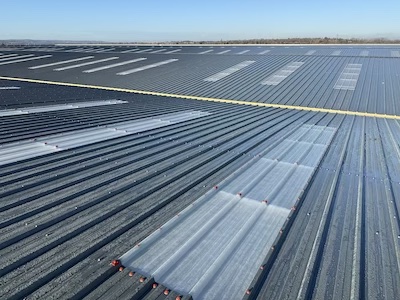
ICB Waterproofing specialises in flat roofing solutions, particularly high-performance single-ply membranes, reinforced bituminous systems and liquid waterproofing technologies. ICB are the UK’s sole distributor of the alwitra® membrane. These systems are widely specified across commercial, residential, education and healthcare sectors, where durability, fire performance and compliance with evolving regulations are critical.

Architects benefit from early engagement with ICB’s Technical team, who provide specification guidance, build-up advice, drainage detailing support and assistance with meeting regulatory requirements such as fire classification and sustainability targets. Many of the systems offered contribute to green roof, blue roof and bio-solar designs, and solar PV, helping projects meet environmental goals alongside technical performance.

ICB Fabrications: precision metal solutions for modern architecture
Architectural detailing increasingly demands bespoke solutions that balance aesthetics with practicality. ICB Fabrications focuses on aluminium fabrication, including cappings, fascias, soffits, flashings and custom architectural features such as planters, screening and façade elements.

Manufactured in the UK using precision machinery and high-quality finishing processes, these solutions allow architects to achieve clean design lines while ensuring longevity in challenging weather conditions. Aluminium’s corrosion resistance, recyclability and design flexibility make it a strong choice for contemporary projects that prioritise sustainability and visual impact.

Early collaboration with the ICB Fabrications team helps ensure details are buildable, cost-effective and aligned with overall design intent — reducing risk later in the project lifecycle.

ICB Projects: integrated renewable and roofing solutions
As sustainability moves to the centre of building design, ICB Projects supports architects with solar PV integration, green roof systems, rooflights, ventilation solutions and associated mounting technologies. The focus is on combining energy generation, daylighting and environmental performance with practical installation considerations.

Whether designing a retrofit scheme or a new build targeting net zero operational carbon, architects can access technical advice on system compatibility, structural considerations and integration with waterproofing layers — ensuring performance without compromising design.

CPD opportunities for architects
Alongside products and services, the ICB Group offers RIBA-approved CPD sessions tailored specifically for architects and specifiers. These typically cover topics such as flat roofing design, green and blue roof systems, solar PV integration, metal detailing and regulatory compliance. These hour-long sessions can be booked via the website and include a free breakfast, or lunch.

A collaborative partner for specification success
By combining waterproofing expertise, precision fabrication capabilities and renewable technology solutions, the ICB Group provides architects with a joined-up approach to building envelope design. From early concept advice through to specification support and ongoing technical guidance, the aim is simple: to help architects deliver buildings that perform well, meet compliance requirements and stand the test of time.

Links:

www.icbgroup.co.uk

www.alwitra.co.uk

www.icbfabrications.co.uk

www.icbprojects.co.uk

www.icbwaterproofing.co.uk

Britain’s Housing Ambitions Depend on Small Builders

Building Products Index Ltd Blocks, Concrete Leave a Comment

View the H+H UK Ltd entry on BPindex

Visit the H+H UK Ltd website

Phil Knight, Head of Private Housebuilding at H+H UK Ltd gives his thoughts on the importance of SME builders and what the government can do to halt their decline.

Today, SMEs account for just 10% of all new homes built in England – down from around 40% in the 1980s. That decline is not just a problem for small builders; it’s a problem for the nation. Without a thriving SME sector, it is difficult to see how the government can deliver homes at the scale and quality the country needs.

The value of small builders

SMEs bring something different to a housing market dominated by large housebuilders: agility, creativity and a deep connection to place. They broaden the capacity of the industry and help accelerate delivery in areas where demand is greatest.

Small builders are rooted in their communities. They can take on difficult, smaller brownfield land that the volume housebuilders overlook. They use local suppliers, employ local trades, and support apprenticeships—keeping money, skills, and jobs within the regional economy. This “multiplier effect” strengthens local economies and fosters community identity.

SMEs are also just as keen as the volume housebuilders to support innovation. Able to move faster in terms of revisiting their designs, SMEs may have the freedom to trial new materials and methods and are often keen to respond quickly to environmental and design challenges.

At H+H, we’ve seen this first-hand. Our Vertical Wall Panels – an offsite-manufactured, aircrete-based system designed to speed up construction and improve thermal performance – were initially developed for the volume housebuilders. Yet we are also seeing the smaller regional builders adopting this innovative approach. Their willingness to experiment helps drive improvements across the industry.

Innovation and environmental progress

Encouraging SME growth is not only about numbers; it’s also about quality and sustainability. Smaller firms are often at the forefront of embracing low-carbon technologies, modern methods of construction, such as Vertical Wall Panels, and energy-efficient design. With the built environment central to the UK’s net zero ambitions, the government will not meet its environmental goals without the commitment of SME housebuilders.

The barriers holding SMEs back

Despite their importance, SME housebuilders face a range of challenges that prevent them thriving. The planning system remains the single biggest barrier. According to the Home Builders Federation’s Housing Market Intelligence Report 2025, over 90% of SMEs identify planning delays as a major challenge.

Large developers can weather these delays by switching resources to other sites. Smaller firms, often reliant on a single live project, do not have that luxury. The result is lost time, lost income, and, too often, lost businesses.

Access to finance remains another persistent problem. Many lenders view small development projects as higher risk, particularly when Section 106 (S106) affordable housing obligations are uncertain. When Registered Providers are unwilling to acquire small numbers of affordable homes with say, fewer than 30 units, SMEs can find themselves unable to secure the project finance needed to get started. Without intervention, this dynamic will continue to choke off supply.

Labour shortages add yet another layer of difficulty. The construction sector faces an ageing workforce and an urgent need for new entrants. Yet the current apprenticeship funding structure makes it difficult for smaller companies to bring in trainees. Rising minimum wages and National Insurance contributions have not been matched by reforms to the Apprenticeship Levy, leaving SMEs to absorb the costs. If we are serious about sustaining the skilled workforce required for housebuilding, apprenticeship funding should be reviewed and expanded.

Signs of progress – but not yet enough

There are reasons for cautious optimism. The government’s *Planning and Infrastructure Bill* aims to simplify and speed up development, and the Ministry of Housing, Communities and Local Government has announced a package of measures to support SME builders. These include streamlined planning for smaller developments, eased Biodiversity Net Gain requirements for sites of up to nine homes, and new exemptions from the Building Safety Levy for medium-sized projects.

Homes England has also pledged to release more land exclusively for SMEs and to pilot a *Small Sites Aggregator* to bring together underused brownfield land.

These are positive steps, but implementation remains slow. With fewer than four years to meet its 1.5 million homes target, the government simply cannot afford to wait.

A call to action

If the government is serious about its pledge to be the party of “builders, not blockers,” it must act decisively to rebuild the SME housebuilding sector. That means:

  • Accelerating planning reform to make smaller projects viable and predictable.
  • Improving access to finance, including flexible support for sites affected by S106 and affordable housing challenges.
  • Reforming apprenticeship funding to encourage more people to enter the industry.
  • Reintroducing targeted first-time buyer support to stimulate demand and restore confidence in local markets.

Reversing the decline of small housebuilders will not be easy, but it is essential. The UK cannot build more homes, better homes, or greener homes without the ingenuity, local focus, and commitment of SMEs. Supporting them is not about favouring developers—it’s about ensuring that every community has a chance to grow.

If the government wants to deliver 1.5 million homes, it must start by building a future in which small builders can once again thrive.

For more information on H+H visit Visit the H+H UK Ltd website

Flyscreens for Commercial & Domestic Premises

Building Products Index Ltd Fly Screens, Screens, Uncategorized Leave a Comment

View The Flyscreen Company entry on BPindex

Visit The Flyscreen Company website

Since 1998, The Flyscreen Company have been manufacturing and supplying custom made screens for windows and doors. Endorsed by Environmental Health Officers as an effective method for insect prevention, our flyscreens offer reliable and hygienic protection against flying insects. Our products are suitable for commercial and residential properties, such as kitchens, factories, care homes, hospitals, and more.

We offer a wide selection of options to accommodate all types of apertures.

Stainless Steel Mesh

This woven insect mesh is durable and manufactured from stainless steel, Type 304 grade. It can be cut to size with a good pair of household scissors. We stock the mesh in 30m long rolls in widths of 75mm, 100mm, 150mm, 200mm, 300mm and 1.2m rolls.

Fibreglass Mesh

Our standard insect mesh is composed of woven fibreglass which is designed to keep flies, wasps, mosquitoes, and other insects out while allowing for natural ventilation through windows, doors, soffits, and other openings. It can be easily trimmed to size with scissors and secured with staples, battening or silicone.

Available in 30m rolls, our mesh comes in a range of widths from 100mm to 400mm, as well as 1.2m or 1.8m wide.

Rodent Mesh

Made with extra tough woven steel, this mesh is used by pest control professionals and construction companies. Used to prevent rats and other rodents, as well as proof against birds for solar panels. Available in 150mm width by 30m length.

Visit our website today to explore our brand new ordering system for made to measure flyscreens.

New and Improved Albany AF1 Ceiling Paint and a New 5L Size

Building Products Index Ltd Paint Leave a Comment

View the Albany entry on BPindex

View the Albany range on the Brewers website

The popular Albany AF1 Ceiling Paint is now even better. Designed specifically for the ‘5th wall’ in the home, the new and improved Albany AF1 Ceiling Paint brings performance upgrades you can genuinely feel while still delivering the flawless super flat matt finish decorators know and trust. Plus, AF1 is now available in a new 5L size, perfect for those smaller projects.

The new formula of Albany AF1 Ceiling Paint delivers a range of key improvements designed to make ceiling work quicker, cleaner and easier. It’s lighter to handle, features a non-spatter formula for tidier application, and has improved recoat times to help you move through jobs more efficiently. Performance through a sprayer has also been enhanced, delivering excellent results whether applying by brush, roller or spray.

With the upgrades, AF1 retains the same trusted qualities decorators rely on. Remaining a water-based ceiling coating packed with matting agents to help hide imperfections and reduce brush and roller marks, creating a smooth, consistent super flat matt finish with dependable anti-flashing performance.

Albany AF1 is the ultimate anti-flashing ceiling paint. Flashing is where, in certain lighting conditions or from certain angles, a painted surface appears to have patches of higher sheen, leaving an uneven finish.

Albany AF1 is specially formulated to avoid this, thanks to its super flat matt finish and ultra-low sheen, non-reflective properties, helping deliver a professional ceiling finish with no distractions.

We’re excited to introduce the brand new AF1 5L pack size, created in response to customer demand. It delivers all the performance and benefits of the 10L pack but easier for those smaller jobs with improved flexibility, easier lifting and more convenient storage.

Key Features

  • Finish: Super flat matt
  • Coverage: Up to 13m² per litre
  • Touch dry: 30 minutes
  • Recoat time: 2–4 hours
  • Application: Brush, roller or spray
  • Spatter: Non-spatter formula
  • Clean up: Water
  • Scrub rating: Class 2
  • Available sizes: 5L and 10L

Shop AF1 online or in your local Brewers Decorator Centre.

Advancing Mechanical Parking Solutions with DPS Limited

Building Products Index Ltd Parking Systems Leave a Comment

View the DPS entry on BPindex

Visit the DPS website

DPS Limited continues to support the UK construction and development sector with a comprehensive range of mechanical parking systems, designed to maximise space, improve efficiency, and respond to the growing challenges of urban parking.

With decades of experience delivering parking solutions across residential, commercial, and mixed-use developments, DPS works closely with project teams to provide systems that integrate seamlessly with site constraints, architectural intent, and operational requirements.

A Flexible Approach to Mechanical Parking

Mechanical parking systems offer an effective way to increase parking capacity without expanding a building’s footprint. DPS Limited supplies and supports a wide variety of solutions, including:

  • Car stackers for independent or dependent parking
  • Car lifts for vertical transportation of vehicles
  • Semi-automatic and automated systems for high-density applications
  • Retrofit-friendly solutions for constrained or existing structures

These systems are particularly well suited to developments where land is limited, planning requirements are strict, or parking efficiency is critical.

🔗 Explore DPS mechanical parking solutions:
Parking Products – DPS Limited

New Strategic Partnerships Announced

To further expand the range of mechanical parking technologies available to UK projects, DPS Limited is pleased to announce new partnerships with leading international manufacturers:

Clients and project teams are encouraged to explore these partners’ products to see how different technologies can be tailored to meet specific site and operational needs.

Supporting Projects from Concept to Delivery

DPS Limited supports projects from early feasibility and system selection through to installation and ongoing maintenance. By working with a broad network of trusted manufacturers, DPS can offer impartial guidance and bespoke mechanical parking solutions suited to each development.

🔗 Visit the DPS Limited homepage:
https://dpslimited.com/

Clement manufactures bespoke steel windows at 30 Charing Cross Road

Building Products Index Ltd Doors, Steel, Steel doors, Windows Leave a Comment

View the Clement Windows entry on BPindex

View the Clement Windows website

Clement Windows Group recently manufactured the new, bespoke steel windows and doors at 30 Charing Cross Road in Central London.

The lower three floors of the building have been subject to major structural works in readiness for a new commercial tenant and now comprise a three-storey restaurant and retail unit.

Clement’s W40 range of slim, steel profiles was chosen for the arched head steel windows on the first floor.  Clement also manufactured the Jansen Economy 50 cold rolled steel sections for the beautifully detailed doors on the ground floor.

Charing Cross Road is one of London’s most bustling streets so the logistics of the project were complex.  The site is within the Covent Garden Conservation Area and the use of genuine, replacement steel windows and doors, which look just like the originals, was a condition of the renovation.

Architect Nathan Hodges commented: “Clement is always our first choice when it comes to steel framed glazing, they consistently provide an excellent service from initial design through to installation on site.  The end product is always of the highest quality.  At 30 Charing Cross Road, the building has been totally transformed by the traditionally designed shopfronts and first floor display glazing – we have a very happy client as a result.”

The Clement W40 range of steel windows and doors is perfect for metal window replacement projects where the pattern of the original fenestration is to be maintained.  These superior quality frames are manufactured from hot rolled steel profiles, which are produced from 98% recycled steel source material.

Clement manufactures external and internal single and double doors from Jansen cold formed steel profiles which meet the latest specifications for energy efficiency and fire protection and, due to their resilience, are suitable for areas of high footfall.

Clement Windows Group offers an innovative range of steel windows, doors, screens and conservation rooflights for both private residences and commercial projects.

01428 643393

info@clementwg.co.uk

www.clementwindows.co.uk

Reaching net zero with structural glass

Building Products Index Ltd Architectural Glass, Uncategorized Leave a Comment

Modernising or improving with structural glazing offers a sensitive and effective route to achieving net zero ambitions, improving the functionality of the building with minimal impact on the existing structure.

Structural glass specialists, Ion Glass are well-renowned experts in wholly bespoke, frameless or minimally framed glass installations with an impressive portfolio of work across a wide range of contemporary, heritage, historic and listed buildings. Their ethos is to respect the sensitivity of the building whilst working to ensure that the glass installations meet all your current requirements – including the drive towards net zero.

We asked Peter Hazeldean, MD of Ion Glass to share one of the most effective uses of structural glass to improve energy consumption and heat loss.

The benefits of frameless glass entrance doors and porches

Peter’s initial suggestion is to consider the entrance to the building.  Adding a structural glass porch creates a thermal buffer zone, reducing heat loss and improving internal comfort without increasing heating output.  A porch installation has the added advantage of generally falling under the planning umbrella of permitted development.

Glass can be used to infill an existing open porch; fitted internally, behind the existing door or used to construct an external structure in either single or double-glazed panels.

Owners of a heritage barn conversion in Reading commissioned Ion Glass to design and install an impressive, visually striking porch to the front of their new home:  the unusual triangular glass porch followed the steep slope of the original barn roof.  The glass porch serves to retain the heat that would otherwise have been lost via the double doors of the original barn entrance – whilst providing additional security.

Use of structural glass fins and beams to create the porch makes this a fully frameless installation with nothing to compromise the original barn structure.

Ion designed an internal  porch to a traditional 1930’s style house, upgrading a draughty front entrance with a new internal glass door set between two fixed side panels. The original timber door was re-used externally, set between two leaded, double-glazed panels to retain the look and feel of the home whilst improving internal light levels to  reduce energy costs and significantly minimising heat loss.

(above) This deceptively simple glass porch infills the original entrance area to create an attractive porch with a frameless glass door, offering considerable benefits for thermal retention.

Peter continued: ‘Replacing timber doors with bespoke glass can eliminate draughts and reduce heat loss whilst also improving the levels of natural light to the interior.  For public buildings, an automatic opening and closing system means the door is only open as required, which improves both heat retention and security.

The new porch recently installed at St John the Evangelist Church at Newbury is double-glazed for maximum heat retention, with the curved double-glazed panels perfectly following the distinctive arch of bricks over the original door.  The original wooden doors are now permanently fixed open allowing natural light to flood the interior (saving on lighting costs) whilst the replacement sliding glass doors are fully automatic, providing easy access as required whilst minimising heat loss.

The expert team at Ion Glass will take your bespoke structural glass design from concept to reality, providing technical advice and drawings to ensure your project meets all criteria before our fully trained and experienced installation teams achieve optimum results on site.

For more information on our frameless glass porches and doors, glass screens or other architectural glass installations visit our website www.ionglass.co.uk and book a call to discuss your project.

Call 0345 658 9988 or email  info@ionglass.co.uk

Smoke Ventilation: Getting the Specification Right from the Start

Building Products Index Ltd Smoke Control, Smoke Ventilation Leave a Comment

View the Smoke Vents entry on BPindex

Visit the Smoke Vents website

Nobody wants to consider the possibility of a fire in a completed building, but informed design decisions can significantly reduce the risks if the worst happens. In many fire scenarios, it is smoke – often spreading more quickly than flames themselves – that presents the greatest danger, filling spaces, obscuring escape routes and disorientating occupants.

Fire burns. Smoke kills.

Most fire-related fatalities are caused by smoke inhalation, often long before flames reach occupied spaces. Modern construction materials can intensify this risk by producing dense, toxic fumes. Controlling the movement of smoke is therefore a fundamental part of any fire safety strategy, particularly in buildings with shared escape routes, protected stairways or more complex layouts.

Use smoke ventilation to protect escape routes.

Smoke ventilation systems allow heat and smoke to escape at high level, helping to maintain a clearer layer of air beneath. This improves visibility in stairways, corridors and other escape routes, supports evacuation and assists fire-fighting operations. In commercial developments, multi-occupancy residential buildings and mixed-use schemes, effective smoke control can play a vital role in protecting life and supporting compliance.

A specification issue, not an afterthought.

Smoke ventilation may not be required in every project, but where it is needed, it should always be addressed early. Guidance within Approved Document B, alongside standards such as BS 9991 and BS 9999, can influence the need for smoke ventilation depending on factors such as building height, compartmentation, travel distances, protected stairways and occupancy type. Considering these requirements at the outset helps design teams avoid costly revisions and achieve better coordination across the wider fire strategy.

 Let the system respond automatically.

Automatic Opening Vents (AOVs) are widely used as part of smoke control strategies in both residential and commercial buildings. Connected to the fire detection system, an AOV opens automatically when smoke is detected, allowing heat and smoke to escape without relying on manual intervention. This is particularly important in larger buildings, unfamiliar environments and areas with higher occupant loads.

Specify systems that meet recognised standards.

Any smoke ventilation system should be fully tested and certified for its intended application. AOVs should be CE marked and tested to BS EN 12101-2, demonstrating suitability for smoke control and alignment with relevant Building Regulations guidance. For architects and developers, product performance, certification and integration with the overall fire strategy should all form part of the specification process.

Plan smoke ventilation at the design stage.

At Smoke Vents, we support architects and developers in specifying smoke ventilation early, helping to simplify compliance and deliver safer, more resilient buildings.

Q&A with Kaz Spiewakowski: Reflecting on 2025 and Looking Ahead

Building Products Index Ltd Automatic door, Automatic door system Leave a Comment

View the GEZE UK entry on BPindex

Visit the GEZE UK website

With 2026 now underway, it feels like the right moment to pause, reflect and look ahead. The past year presented both challenges and opportunities for the construction and building products sector, and this was no exception for GEZE UK. To kick off the year, GEZE UK Marketing Manager Lewis Tandy caught up with Managing Director Kaz Spiewakowski to discuss the company’s performance in 2025, plans for the year ahead, his personal journey and his outlook on the industry.

Lewis Tandy (LT): Hi Kaz, thanks for sitting down with me today. Let’s start with the big picture, how was 2025 for the business?

Kaz Spiewakowski (KS): Hi Lewis, no problem. Overall, I’d say 2025 was another positive year for GEZE UK. It wasn’t without its challenges and despite difficult trading conditions we made real progress across the business. There was significant uncertainty in the market but we stayed focused on doing the right things which really showed in our results.

Importantly, we didn’t just focus on turnover. We focused on improvement across the business, including improving our relationships with customers and partners, which puts us in a much stronger position heading into 2026.

LT: What were some of the key achievements or highlights from last year?

 KS: There were quite a few, actually. Firstly, from a business point of view, we improved our customer service which is an ongoing process requiring training and change in behaviour and while we have improved, we intend to continue this improvement in the coming year.

I’m also pleased to say that we exceeded our profitability targets for the 2024/2025 financial year, which is a good result and not to be underestimated in what is a tough economic environment. Clearly its pleasing to say that we are on a strong financial base which while keeping our shareholders happy, allows us to invest in people and processes to improve the business but also gives our suppliers confidence in dealing with GEZE.

It was great to see GEZE recognised at the National Fenestration Awards, where we won ‘Fire Door Product of the Year’ for the Slimdrive EMD-F Powered Swing Door Drive.

Also, in September we successfully completed recertification by LRQA for ISO 9001, 14001 & 45001, which is a tremendous achievement and vital in assisting us operationally in a world where compliance and validation of compliance is critical to success.

Finally, 2025 saw GEZE undertake significant CSR activities, in particular our charity work on behalf of Kids Village and Lichfield Canal Trust was fantastic to see.

LT: Were there any particular challenges the business had to navigate in 2025?

KS: Like most businesses, one of our biggest challenges in 2025 was managing increased costs across the board. From materials and logistics through to energy and operational expenses, pressures continued to rise, and that’s something the whole industry has had to navigate.

The key for us was finding the right balance, absorbing costs where we could, being transparent with customers and making smarter decisions internally. It pushed us to look closely at how we operate, improve efficiencies and focus even more on delivering great value and service to our customers.

LT: Switching gears a bit, can you tell us about your background and how you ended up as Managing Director at GEZE UK?

KS: My background and Education is an engineer, both apprentice trained and I achieved a BEng in Mechanical Engineering from the University of Birmingham. Although, I always knew that pure engineering was not my future and I quickly set about rounding out my experience with operational and commercial roles. I held MD roles in the precision engineering sector supplying a wide variety of challenging sectors, including electronics and automotive, which was a great experience and has set my standards when I came in to the supply of products in the construction sector, firstly with Exidor and latterly GEZE. I’ve always been ambitious and willing to test my ability to adapt and learn, which took me from Exidor to what was an attractive opportunity with a well respected German manufacturer and I’ve been here now for 13 years.

 LT: How would you describe your leadership style?

KS: You’re probably better asking some of your colleagues but I think I have an open style. My communication tends to be clear and direct. I don’t believe in micro-managing as I believe managers should manage, the clues in the title. That doesn’t mean that I’m not close to the business but people tend not to enjoy their role if they are constantly told what to do. I believe you need to be empowered to make decisions but clearly there needs to be logic behind the decision and if it goes wrong then that’s ok as long as we learn from the mistake.

Finally, I hope that I facilitate people to become better, my aim is to always leave a business in a better position than I found it when I joined and a lot of that is due to the people and the culture. As I said, you probably need to validate this with your colleagues!

LT: Turning to 2026, what’s the focus for GEZE UK?

KS: The main theme for 2026 is improving processes and efficiencies to deliver sustainable, sensible growth. We want to keep moving forward, but in a way that’s right for the business and our customers.

We’re planning to introduce some exciting new products, including the TS 7000 door closer, “my GEZE Control” a smart solution for networking doors, windows and safety systems, while continuing to build on the strengths of our existing range, like our PACE [Pedestrian Access Control Equipment] line. As always, our focus is on delivering solutions that help create safer, more efficient, and better-performing buildings.

Education will be a major focus for us in 2026. We’re keen to expand our CPD offerings, helping architects and specifiers tackle increasingly complex requirements with confidence.

We’re also committed to investing in our people and strengthening our team where needed, ensuring we continue to deliver the best value and expertise to our customers.

In short, there is lots planned for 2026, so watch this space!

LT: What’s your outlook for the industry as a whole over the next few years?

KS: I think there’s nervousness about the year ahead but overall the sector is forecast to grow, albeit a small amount, which is positive. Cost pressures and regulatory requirements aren’t going away but there’s still significant activity in the sector with a real focus on improving building performance and delivering better long-term value, which is a positive thing.

At the same time, the industry will need to address the ongoing skills gap. Finding and developing young talent to replace experienced tradespeople retiring from the sector is going to be crucial. Collaboration, training and creating clear career paths will be key if the industry is going to keep up with demand and continue delivering high-quality projects.

LT: Finally, is there anything else you’d like to say as we start 2026?

KS: Just a genuine thank you. To our customers, partners, and suppliers, your support and trust mean a lot to us. We’re excited about what’s ahead and committed to continuing to deliver the same level of service, quality and expertise people expect from us.

We’re looking forward to building on what we’ve achieved and making 2026 another strong year.

For any general enquires, please contact us via our website or email:

Website: www.geze.co.uk/en

Email: info.uk@geze.com

New Stannah Lifts website streamlines product selection to support contractors, architects and project teams

Building Products Index Ltd Lift, Platform Leave a Comment

View the Stannah Lifts entry on BPindex

Visit the Stannah Lifts website

Stannah Lifts Distribution & Service (LD&S), a leader in the UK lift sector, has launched a new commercial website that makes it easier for construction professionals to find the right lift solution.

Developed around the needs of architects, contractors and consultants, the site features a simplified structure, improved navigation, clearer product pages and more consistent data, making it easier to access technical information and identify the right lift solutions for different building types.

Replacing a website that served the industry for nearly a decade, the new platform responds to the growing need for accurate, accessible product data in building design and construction, which is essential for demonstrating compliance with building regulations.

Key improvements include:

  • Easy to navigate view of the complete Stannah product range in one place
  • Enhanced on-page product specifications that make comparing lift types, configurations and aesthetic options quicker and more intuitive
  • Sleek, unified product pages packed with consistent, project-ready information to support confident decision-making
  • Faster access to product technical documentation and gated resources that help architects, contractors and consultants specify with certainty

This updated approach ensures faster, more confident decision-making, whether customers are researching products, comparing specifications or downloading documentation.

Archie Hungwe, CEO of Stannah Lifts Distribution & Service, said: “Our new website gives the construction sector clearer technical information, simplifies specification and helps project teams quickly find the right lift solution. As construction demands evolve and our product offering have become more complex, we’re committed to supporting contractors, architects and consultants with the tools and resources they need to deliver high-quality, compliant lift installations.”

Built on a more flexible and scalable digital architecture, the website now allows Stannah to introduce new products and technical content more easily as the business expands its portfolio.

To explore the new website and Stannah’s lift solutions, visit: www.stannahlifts.co.uk.